

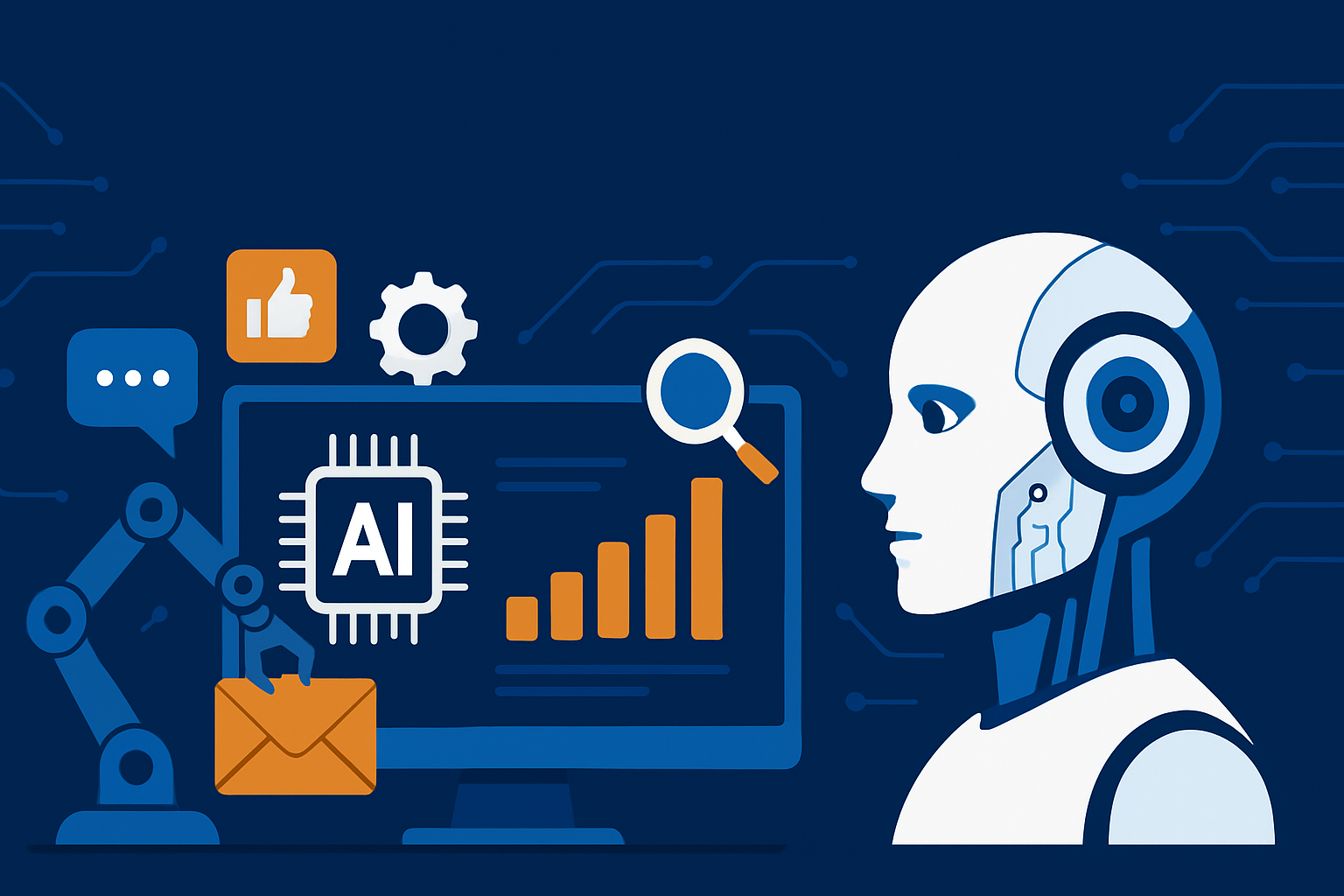
The marketing landscape is evolving faster than ever. As consumer behavior becomes more unpredictable and data-driven, traditional marketing tactics can’t keep up. Enter AI marketing automation — a transformative force reshaping how brands connect, personalize, and convert audiences in 2025.
This article breaks down what AI marketing automation truly means, how it works, and why it’s becoming essential for competitive growth. Whether you’re a marketing leader, small business owner, or digital strategist, you’ll learn how to harness AI-driven tools to scale smarter — not harder.
What Is AI Marketing Automation?
At its core, AI marketing automation combines artificial intelligence with automated marketing systems to make campaigns smarter and more efficient. Traditional automation executes preset workflows (like sending emails or scheduling posts). AI adds a layer of intelligence — learning from data patterns to predict behaviors, personalize experiences, and optimize performance in real time.
For example, AI can:
- Predict which leads are most likely to convert (predictive analytics).
- Generate personalized product recommendations.
- Automate content creation and distribution.
- Optimize ad bids and audience targeting.
In short, AI marketing automation doesn’t just do things for you — it learns how to do them better.
Why AI Marketing Automation Is Transforming Marketing in 2025
1. Data-Driven Personalization at Scale
Consumers expect hyper-personalized experiences. According to Salesforce, 73% of customers expect companies to understand their unique needs. AI automation enables marketers to deliver on this expectation by analyzing data from multiple sources — CRM, email, web analytics, and social — to tailor messaging to each user.
Imagine an eCommerce brand that automatically adjusts homepage content based on browsing history or dynamically sends individualized offers based on real-time behavior. This level of personalization was once manual and time-consuming; now, AI tools like HubSpot’s AI Insights or Adobe Sensei do it seamlessly.
2. Smarter Lead Scoring and Customer Journey Mapping
AI marketing automation platforms are revolutionizing lead scoring — ranking prospects based on likelihood to convert. Instead of relying on static rules (e.g., “email opened = +5 points”), AI learns from behavioral patterns across channels to predict who’s ready to buy.
Additionally, tools like Marketo Engage and ActiveCampaign visualize customer journeys, automatically moving leads through nurturing sequences. This ensures that sales teams focus on high-intent leads while automation continues nurturing the rest — boosting conversion efficiency.
3. Predictive Analytics for Better Decision-Making
Predictive analytics is the heartbeat of AI marketing automation. By analyzing historical and real-time data, AI forecasts trends such as customer churn, seasonal demand, or campaign performance.
For example:
- Retailers can predict which products will trend next month.
- SaaS companies can identify customers at risk of canceling.
- Email platforms can determine the best send times for engagement.
This empowers marketing teams to make proactive, data-backed decisions instead of reactive guesses — saving both time and ad spend.
4. AI-Generated Content and Campaign Optimization
In 2025, AI-powered content generation is no longer futuristic — it’s standard practice. Platforms like Jasper, Writesonic, and ChatGPT (that’s me!) assist marketers in creating blog posts, ad copy, or email sequences tailored to audience preferences.
Moreover, AI algorithms constantly test variations of campaigns — from subject lines to landing page layouts — to determine what performs best. This automated optimization cycle means every campaign improves itself over time, maximizing ROI without manual tweaking.
5. Integration Across the Marketing Tech Stack
Modern marketing ecosystems are vast — CRM systems, ad platforms, analytics tools, and social schedulers all generate valuable data. AI marketing automation acts as the connective tissue between them.
By syncing data across tools like Salesforce, Google Ads, Meta Business Suite, and Mailchimp, AI ensures consistent messaging, accurate attribution, and smarter decision-making. The result: a unified marketing engine that runs efficiently and adapts continuously.
How to Get Started with AI Marketing Automation
Transitioning to AI marketing automation doesn’t mean replacing your team — it’s about augmenting their abilities. Here’s a quick roadmap for getting started:
Step 1: Audit Your Marketing Workflows
Identify repetitive, time-consuming tasks such as lead nurturing, email segmentation, or campaign reporting. These are prime candidates for automation.
Step 2: Choose the Right Platform
Select a tool that integrates with your existing tech stack. Some leading options include:
- HubSpot Marketing Hub
- GoHighLevel
- ActiveCampaign
- Salesforce Marketing Cloud
Step 3: Start Small — Then Scale
Implement AI for one workflow (e.g., automated lead scoring). Once results are proven, expand into predictive analytics, chatbots, or dynamic personalization.
Step 4: Continuously Measure and Optimize
AI thrives on data feedback. Set clear KPIs (click-through rates, conversion rates, ROI) and allow the system to learn from performance patterns over time.
Conclusion
AI marketing automation isn’t just a trend — it’s the new marketing operating system for 2025 and beyond. It empowers teams to work smarter, deliver personalized experiences, and make decisions based on predictive intelligence rather than intuition.
The brands that embrace AI now will not only save time and resources but also build deeper, data-driven relationships with their customers.
Ready to future-proof your marketing strategy? Start exploring how AI automation can elevate your campaigns today — your competitors probably already are.
Leave a Reply